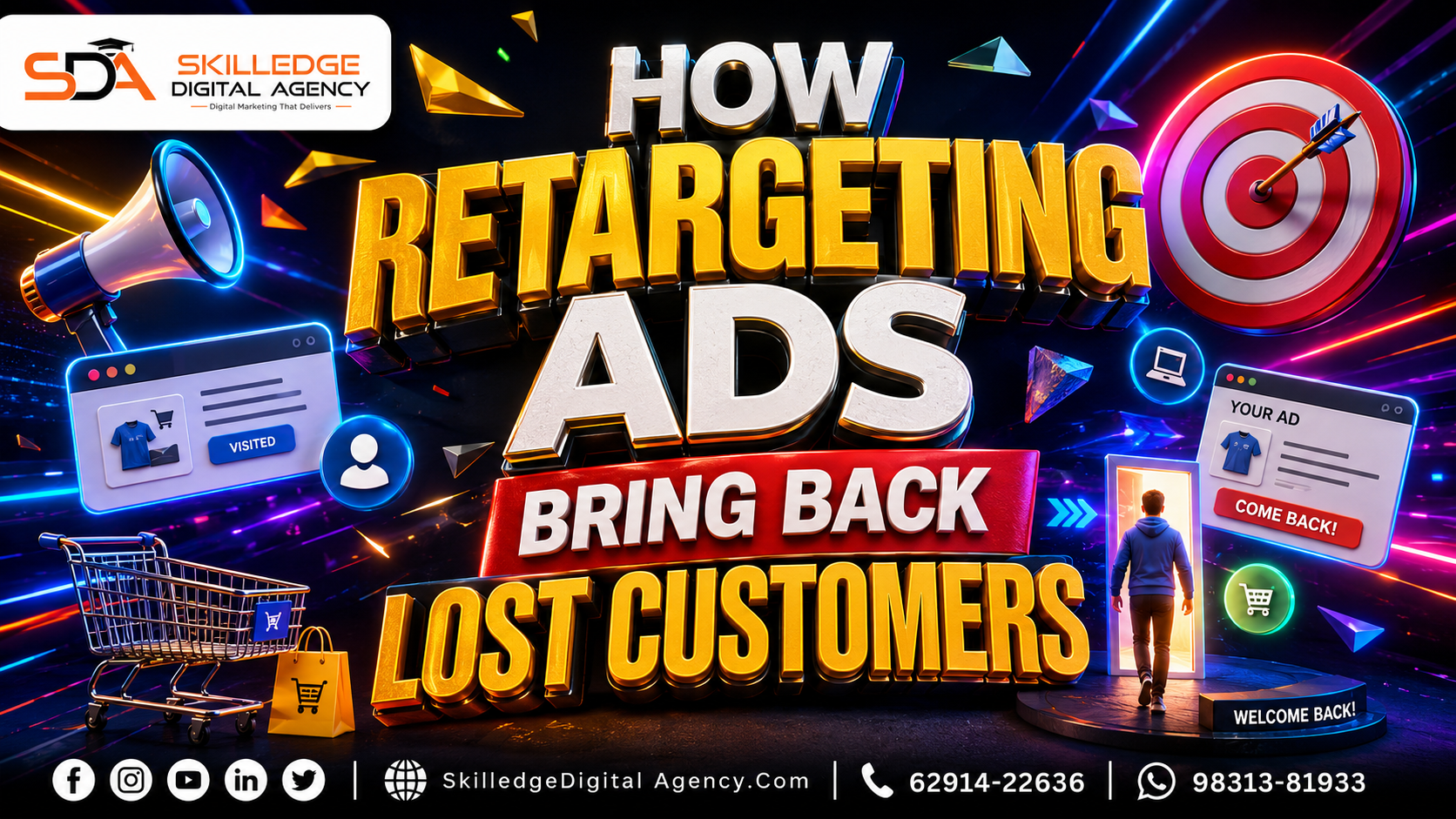
When people leave without buying, they’re rarely saying “no” forever; more often, they’re saying “not yet.” That’s why customer retargeting works so well: it gives us a second chance to meet the buyer at the right moment, with the right message, after the first spark of interest has already happened. Retargeting is widely used because it consistently performs better than cold traffic in clicks, conversions, and ROI, and recent 2026 benchmark summaries show retargeted visitors converting far more often than non-retargeted users: How retargeting ads bring back lost customers.
At Skilledge Digital Agency, I teach this as a timing strategy, not just an ad tactic. A visitor who browsed a product, compared prices, or abandoned a cart has already moved through part of the funnel, so we’re not introducing the brand from scratch—we’re continuing the conversation. That’s the hidden advantage of customer retargeting ads: they meet buyers where hesitation happened and help restart momentum instead of starting over.
How the comeback actually works: How retargeting ads bring back lost customers
The mechanics are simple, but the psychology is powerful. A tracking pixel, platform audience, or CRM list identifies a previous visitor, then serves a follow-up ad that matches what they viewed, added to cart, or engaged with. When we use retargeting ads for customers well, the ad feels less like an interruption and more like a reminder, which is why segmented campaigns and personalized creatives outperform generic display ads.
Here’s the important mental shift: we’re not “chasing” people around the internet; we’re reducing friction in a decision they were already making. The best customer journey retargeting maps where the person dropped off—product page, cart, checkout, lead form, pricing page—and then answers that exact objection with a relevant message. That could mean social proof, a limited-time offer, a better explanation, or a softer re-entry path.
Why people leave before buying: How retargeting ads bring back lost customers
Lost customers usually don’t disappear for one reason. They leave because of hesitation, distraction, comparison shopping, price sensitivity, shipping concerns, or simply timing. In ecommerce, even strong-intent shoppers often abandon carts, and benchmark reports show retargeting remains one of the most effective ways to recover that demand later.
From a mentor’s perspective, this is where customer retention marketing begins before the first sale. If we understand why the buyer paused, we can choose the right follow-up: urgency for procrastinators, reassurance for skeptics, product education for researchers, or bundle offers for deal seekers. The more precise the diagnosis, the better the recovery.
The psychology behind the click: How retargeting ads bring back lost customers
Retargeting works because familiarity lowers resistance. When someone sees the same brand again after already engaging with it, the mind treats the brand as safer, more relevant, and easier to trust. Industry summaries in 2026 report stronger click-through rates, higher conversion rates, and improved response when campaigns are personalized or dynamic rather than broad and repetitive.
This is also why conversion retargeting is not just about showing ads more often. It’s about showing the next best message at the next best moment. A shopper who viewed a product page may respond to a product reminder, while someone who compared plans may need a feature comparison or proof of ROI. The message match is what turns recall into revenue.
Segments that deserve different ads: How retargeting ads bring back lost customers
Not every visitor should see the same follow-up. A first-time visitor, an abandoned cart user, and a past buyer each need a different path, and that’s where customer retargeting becomes strategic instead of generic. Segmentation based on behavior, recency, page depth, and purchase stage consistently improves performance because the ad reflects what the person already did.
Use these audience buckets as a practical starting point:
Product viewers, for people who browsed but didn’t add to cart.
Cart abandoners, for people who showed buying intent but stopped before checkout.
Past buyers, for cross-sell, upsell, replenishment, or repeat purchase.
High-intent lead visitors, for pricing page or demo-request users.
Engaged non-buyers, for video viewers, email clickers, or social engagers.
At Skilledge Digital Agency, we often build customer retargeting ads around these segments because the creative and offer should change with the level of intent. That’s how we make the ad feel intelligent instead of intrusive.
Creative that wins back attention: How retargeting ads bring back lost customers
The best retargeting creative doesn’t look desperate. It looks helpful, specific, and calm. Strong creative usually includes one clear problem, one clear promise, and one clear next step, which is why retargeting ads for customers often perform best when they focus on clarity rather than hype. Recent benchmark roundups also show that dynamic product ads, personalized messaging, and sequential storytelling can improve performance materially.
A simple creative formula works well:
Remind them what they viewed.
Remove one objection.
Offer one reason to return now.
End with one direct action.
That’s the structure we use in customer journey retargeting when we want to bring someone back without creating pressure. A calm reminder like “Still deciding? Here’s what makes this worth it” can outperform aggressive language because it respects the buyer’s process.
Timing matters more than frequency: How retargeting ads bring back lost customers
Many marketers over-focus on how many times the ad appears and under-focus on when it appears. Recent data shows retargeted ads perform strongly soon after site interaction, and excessive repetition can hurt engagement, especially when the same user sees the same message too many times. Good customer retention marketing isn’t loud; it’s well-timed.
I tell clients at Skilledge Digital Agency to think in windows:
First 24 hours: quick reminder and reassurance.
Days 2–7: objections, proof, and social validation.
Days 8–14: stronger offer or new angle.
After that: broader nurture or exclude the user temporarily.
That’s how conversion retargeting stays effective without burning the audience. Frequency caps, sequential ads, and audience exclusions protect both performance and brand trust.
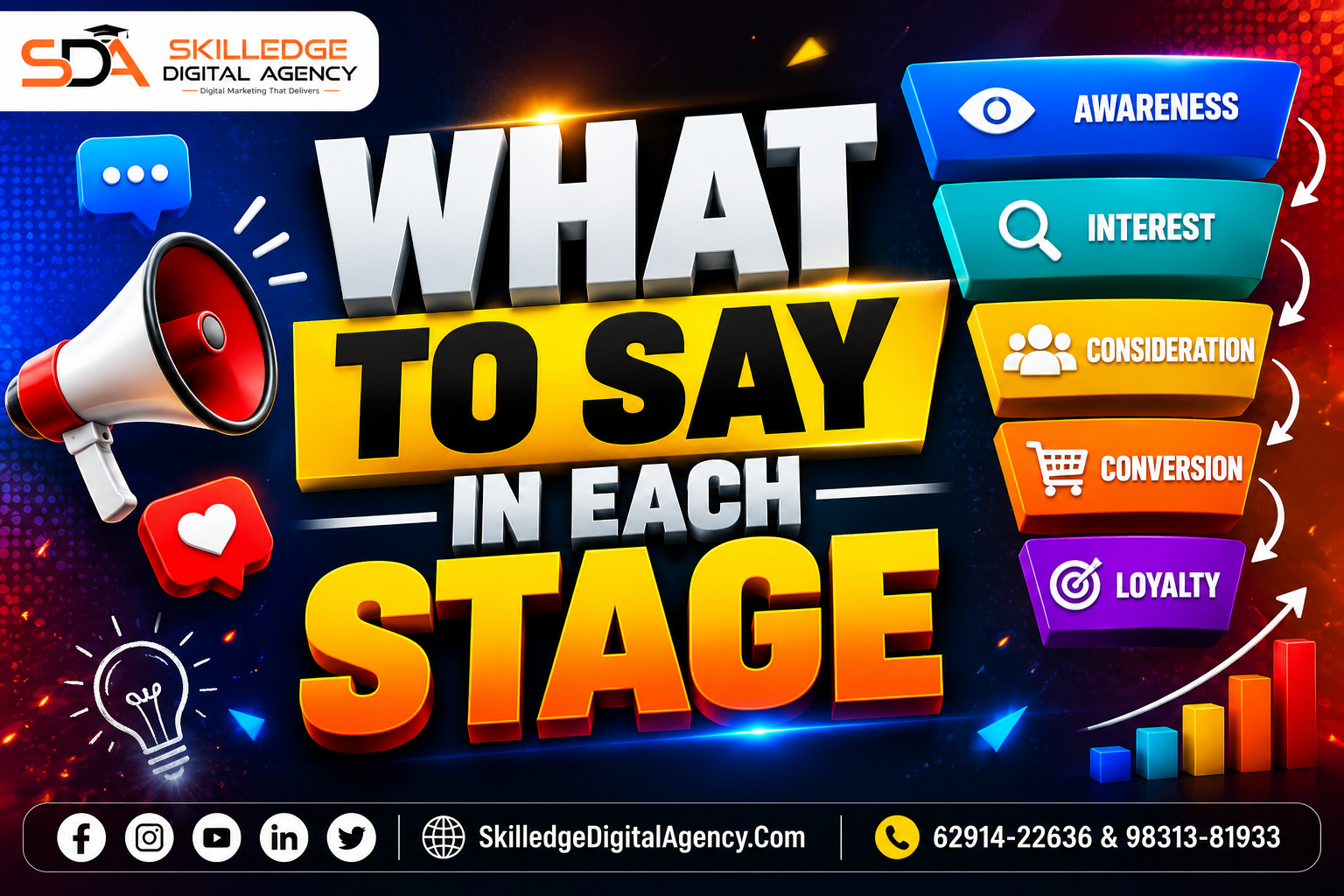
What to say in each stage: How retargeting ads bring back lost customers
The message should match the stage, not just the product. Someone who abandoned a cart may need shipping reassurance or a limited-time offer, while a lead who didn’t book a call may need a case study or outcome proof. This is where customer retargeting ads become more like guided selling and less like banner advertising.
A useful stage-to-message map looks like this:
Awareness drop-off: educate and reintroduce the value.
Consideration drop-off: compare features, outcomes, or proof.
Cart drop-off: address urgency, trust, and convenience.
Post-purchase: encourage repeat purchase or related products.
Dormant customer: revive with a new offer or fresh reason to return.
That’s also why retargeting ads for customers should never be built from one template alone. The strongest campaigns adapt the story as the buyer moves along the funnel, which is the essence of customer journey retargeting.
Platforms that do the heavy lifting: How retargeting ads bring back lost customers
Most brands run retargeting across Meta, Google, and sometimes LinkedIn or programmatic display. 2026 benchmark summaries show strong results for custom audiences, website audiences, dynamic product ads, and CRM-based lists, especially when match quality and tracking are solid. For ecommerce brands, customer retargeting is often strongest when product feeds, pixel events, and CRM data work together.
If we’re building for Skilledge Digital Agency clients, I usually recommend this order:
Start with website visitors and cart abandoners.
Add email or CRM audiences.
Layer dynamic product retargeting.
Expand into social engagement retargeting.
Use exclusion lists to avoid waste.
This layered approach improves control and helps customer retention marketing stay efficient rather than noisy. It also creates a cleaner learning loop for optimization.
Tracking without breaking trust: How retargeting ads bring back lost customers
Modern retargeting needs better measurement and better privacy discipline. Recent 2026 coverage highlights the growing importance of server-side measurement, match quality, and privacy-aware data use as platforms and regulations keep evolving. That means conversion retargeting should rely on consented, well-structured data wherever possible.
In practical terms, that means:
Keep consent and privacy notices clear.
Use first-party data carefully.
Improve event tracking quality.
Exclude recent converters.
Respect opt-outs and frequency limits.
This is where customer retargeting becomes a trust-building system. If we use data responsibly, we create relevance without making the user feel watched.
Why the offer still matters: How retargeting ads bring back lost customers
Not every retargeting campaign needs a discount, but every campaign needs a reason to act. Sometimes the best offer is reassurance, not price reduction. For example, a free shipping threshold, a warranty reminder, a demo booking, or a customer testimonial can be more persuasive than a coupon, especially when the brand already has strong demand.
At Skilledge Digital Agency, we treat offers like tools, not crutches. If the only thing bringing people back is a discount, the campaign may be solving the wrong problem. Strong customer retargeting ads preserve margin while improving conversion by matching the offer to the friction point.
Why this is a revenue system: How retargeting ads bring back lost customers
Retargeting is not a side tactic; it’s a revenue recovery engine. 2026 benchmark roundups show retargeted users converting at higher rates than cold audiences, with dynamic and segmented campaigns often outperforming generic ads. That’s why customer retargeting belongs inside the full growth strategy, not on the sidelines.
Think of it this way: paid acquisition brings people in, but customer retention marketing helps keep the profit from leaking out. Retargeting closes the loop between interest and action, and in many accounts it becomes the bridge between “traffic” and “sales.”
A Skilledge framework
Here’s the framework I’d use if we were building this together at Skilledge Digital Agency. First, identify the lost user group and define the drop-off point. Second, match that group with a tailored message, offer, or proof asset. Third, set timing rules, caps, and exclusions so the campaign stays sharp.
We also check three questions before launch:
Did the user show intent?
Is the message specific to the drop-off?
Is there a clean conversion path?
If the answer is yes, conversion retargeting usually has a strong chance to recover value. If the answer is no, we refine the audience or the creative before spending more.
Closing the loop: How retargeting ads bring back lost customers
The real power of customer retargeting is that it respects human behavior instead of fighting it. People get distracted, compare options, and delay decisions; smart retargeting simply gives them a better path back. When we combine timing, segmentation, creative clarity, and privacy-aware measurement, we turn abandoned interest into a measurable comeback.
For Skilledge Digital Agency, this is one of the clearest examples of strategy meeting psychology. We’re not just serving ads—we’re rebuilding momentum, one relevant reminder at a time. That’s why customer retargeting ads remain one of the most practical growth levers in modern digital marketing.
Skilledge Digital Agency

What Skilledge Digital Agency delivers for your brand
| Service / Feature | What you get | Included in |
|---|---|---|
Search Engine Optimization (SEO) | ||
Technical SEO Audit Site speed, crawlability, Core Web Vitals, schema markup | Faster rankings, zero penaltiesFull technical overhaul with monthly monitoring | All Plans |
Keyword Strategy & Mapping Competitor gap analysis + intent-based clustering | Traffic that convertsTarget buyers, not browsers | All Plans |
Authority Link Building White-hat backlinks from DA 40+ real publishers | Domain authority growthSustainable, Google-safe link profile | Growth+ |
Local & Hyperlocal SEO GMB optimization, citations, local schema | Dominate “near me” searchesMap pack visibility + local trust signals | All Plans |
Paid Advertising (PPC & Meta) | ||
Google Ads Management Search, Display, Shopping & Performance Max | 3–5× ROAS targetExpert bid strategy + A/B ad copy testing | Growth+ |
Meta / Instagram Ads Audience targeting, retargeting funnels, creative testing | Lower CPL, higher CTRFull-funnel Meta campaigns built to scale | Growth+ |
Landing Page Optimization CRO-focused pages designed to convert ad traffic | Higher Quality ScoreReduced bounce, better ad relevance | Elite |
Content Marketing | ||
SEO Blog & Article Writing Long-form, E-E-A-T optimized, topic cluster strategy | Organic traffic engineContent that ranks and drives leads for months | All Plans |
Short-form Video & Reels Script, shoot guidance, editing & platform optimization | Viral-ready contentBuilt for TikTok, Instagram & YouTube Shorts | Growth+ |
Content Calendar & Strategy 30/60/90-day editorial plan aligned to business goals | Consistent brand voiceNever run out of ideas or miss a moment | All Plans |
Social Media Management | ||
Platform Management (5 channels) IG, FB, LinkedIn, X, YouTube — posting & community | Active, engaged audienceDaily management + comment/DM response | Growth+ |
Social Media Analytics Reach, engagement rate, follower growth tracking | Data-backed decisionsMonthly performance deck with insights | All Plans |
Influencer Collaboration Micro to macro influencer identification & outreach | Social proof at scaleAuthentic reach to new, targeted audiences | Elite |
Email & CRM Marketing | ||
Email Campaign Management Design, copy, list segmentation & automation flows | 40%+ open ratesPersonalized sequences that nurture and close | Growth+ |
Marketing Automation Lead nurture, cart abandonment, re-engagement drips | Revenue on autopilotWorks 24/7 to move leads down the funnel | Elite |
Analytics, Reporting & Strategy | ||
Monthly Performance Reports Custom dashboards: traffic, leads, ROAS, rankings | Full transparency, no fluffKnow exactly what’s working and why | All Plans |
GA4 + Search Console Setup Full tracking configuration, event goals, attribution | Zero tracking blind spotsAccurate data from day one | All Plans |
Competitor Intelligence Quarterly deep-dive: gaps, opportunities, market share | Stay 3 steps aheadKnow what rivals do before they scale it | Elite |
Website & Conversion | ||
CRO — Conversion Rate Optimization Heatmaps, A/B tests, UX fixes, form optimization | More leads, same trafficTurn visitors into enquiries without extra ad spend | Elite |
Website Speed & Core Web Vitals Performance optimization, image compression, caching | Google loves fast sitesBetter UX, better bounce rate, better rankings | All Plans |
Ready to grow with Skilledge?Get a free audit & custom strategy — no obligation, no fluff. | ||
Contact Details
Skilledge Digital Agency
Phone/Whatsapp: +91 62914-22636 / 98313-81933
Email: Mktg@SkilledgeDigitalAcademy.Com
Website: www.skilledgedigitalacademy.com/services/
Links: Get Directions | Facebook | Twitter | Instagram | LinkedIn