
An SEO audit is a website health check that helps us find what’s helping rankings and what’s holding them back. When we do a thorough website audit, we’re not just checking for broken links or missing titles; we’re looking at how search engines and users experience the entire site. Moz and Yoast both describe auditing as a process for uncovering crawl, indexation, content, and usability issues that affect visibility and engagement.
For Skilledge Digital Agency, this matters because every improvement we make can lift traffic, trust, and conversions at the same time. A good audit gives us a roadmap, not just a report. It tells you what to fix first, what can wait, and what should be monitored over time.
What we check first: How to do a basic SEO audit of your website
Before we dive deep, we start with the fastest high-impact signals. In a free seo audit, the first question is simple: can search engines access and understand the site? Moz recommends confirming analytics access, Search Console setup, and a crawl of the site before digging into details.
We also want to think like a search engine and like a visitor at the same time. If a page is technically visible but frustrating to use, it won’t perform well for long. That’s why the best audits blend technical checks, content review, and user experience analysis into one process.
The 5-minute visibility test: How to do a basic SEO audit of your website
Start with these quick checks:
Search your domain with
site:yourdomain.comto see whether pages are indexed.Open Google Search Console and inspect the homepage and a few key pages.
Test whether the site works well on mobile.
Check if the title tag and meta description make sense.
Confirm that the homepage loads quickly and cleanly.
This isn’t the full answer, but it tells us whether the site is in trouble before we spend hours on deeper analysis.
Crawl the site structure: How to do a basic SEO audit of your website
A strong seo technical audit starts with crawling the site the same way a search engine does. Moz recommends using a site crawl to scale the process beyond one page, especially when you need to find problems across many URLs. Yoast also recommends crawling the site early so we can identify technical issues before moving into content and UX review.
When we crawl the site, we’re looking for patterns rather than isolated errors. One broken page is a fix; a pattern of duplicate titles, missing canonicals, or blocked assets is a systems problem. That’s the kind of issue Skilledge Digital Agency would prioritize immediately because it usually affects multiple pages at once.
What a crawl should reveal
A proper crawl should surface:
Missing or duplicate title tags.
Missing or duplicate meta descriptions.
Broken links and 404 pages.
Redirect chains and loops.
Canonical tag issues.
Noindex or robots.txt blocks.
Thin or duplicate content pages.
Think of this step as checking the wiring behind the walls. The content may look fine on the surface, but if the structure is broken, rankings usually stall or drift over time.
Fix indexing and crawl issues: How to do a basic SEO audit of your website
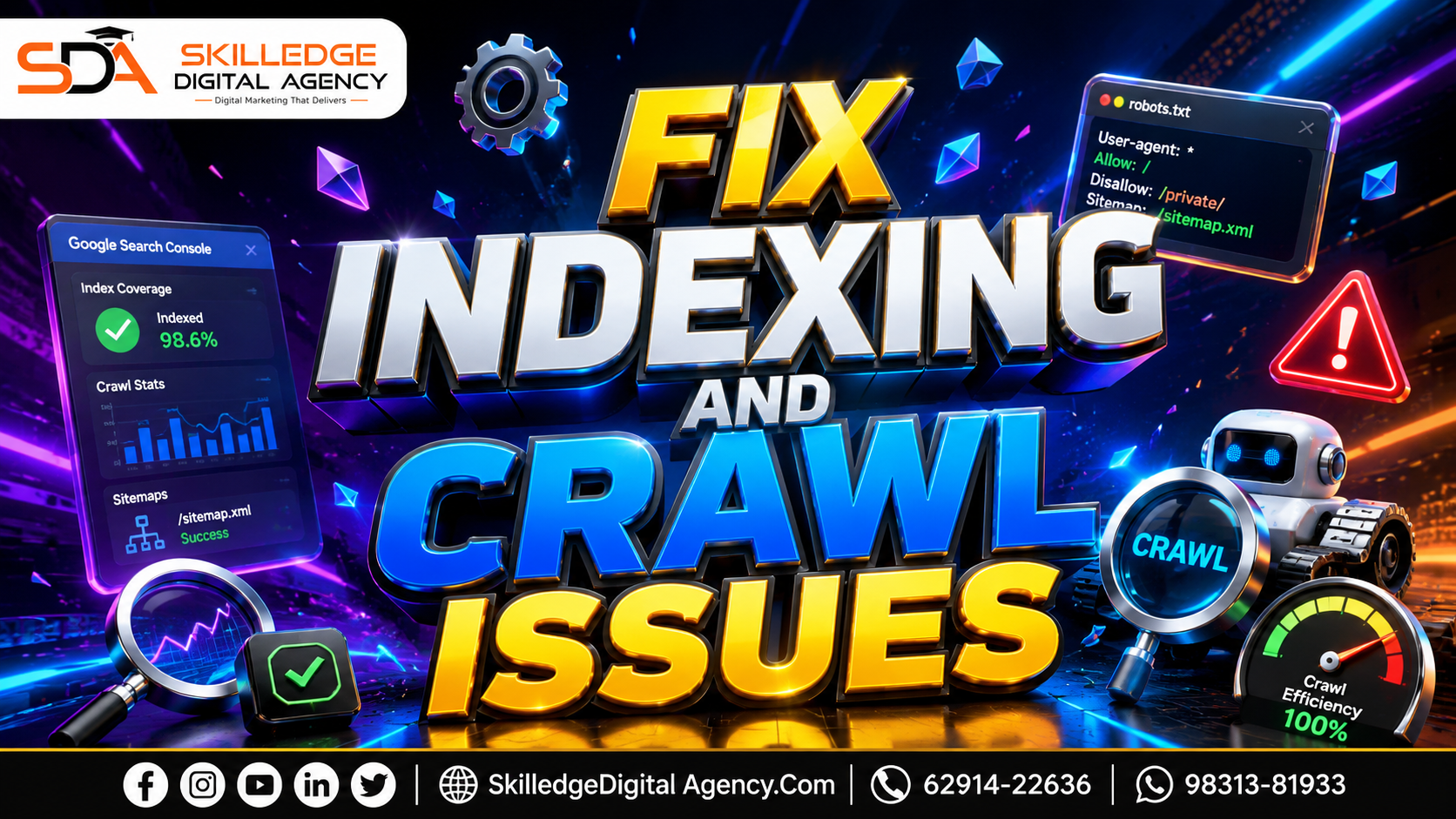
The biggest technical question in any website audit is whether important pages are indexable. Moz explains that pages need to return a 200 status code, avoid accidental noindex tags, and remain accessible to crawlers unless there is a clear reason to block them. Search Console’s Indexing and URL Inspection reports are especially useful here because they show whether Google sees the page as indexable and which version it treats as canonical.
A common mistake is blocking useful pages in robots.txt while assuming they’ll still rank. Another is creating multiple versions of the same page and letting Google guess the canonical version. That creates mixed signals, which makes crawling and ranking less efficient.
Indexation checklist: How to do a basic SEO audit of your website
Check these items:
Pages return a 200 status.
Important pages are not blocked by robots.txt.
No accidental noindex tags exist on key pages.
XML sitemap includes the right URLs.
Canonical tags point to the preferred version.
Google-selected canonical matches your preferred canonical.
If a page is supposed to rank but doesn’t appear in Search Console, that’s a strong signal to investigate immediately. In many cases, the fix is simple; the challenge is finding the problem before it spreads to the rest of the site.
Review on-page signals: How to do a basic SEO audit of your website
An on page seo audit checks whether each page clearly tells search engines and users what the page is about. Titles, headings, URLs, and meta descriptions all work together like signposts. Yoast notes that titles, headings, canonical tags, schema, and keyword targeting all remain important parts of page-level optimization.
This is also where we avoid the trap of writing for machines only. The page should still read naturally, answer the query well, and help the visitor take the next step. At Skilledge Digital Agency, we’d treat on-page SEO as a conversion tool, not just a ranking checklist.
Page-level essentials: How to do a basic SEO audit of your website
Review each important page for:
A unique title tag with the main topic up front.
A meta description that invites clicks.
A single clear H1 that matches the page intent.
H2s and H3s that organize the content logically.
Descriptive internal links.
Image alt text that supports accessibility and context.
When these basics are missing, search engines have to work harder to interpret the page. When they’re done well, the page becomes easier to rank and easier to trust.
Audit content quality: How to do a basic SEO audit of your website
A website content audit is where we ask whether the site deserves to rank. Not every page needs to be longer; some pages need to be sharper, fresher, or more specific. Yoast emphasizes reviewing thin content, duplicate content, content quality, and user intent alignment as core parts of an audit.
This is where many sites lose rankings quietly. They publish lots of content, but not enough of it is clearly useful, original, or focused on a specific search need. For Skilledge Digital Agency, we’d look for pages that can be merged, expanded, rewritten, or retired based on value rather than volume.

Questions to ask each page
Ask:
Does this page solve a real problem?
Is the content fresh and accurate?
Does it cover the intent better than competing pages?
Is it too thin to stand on its own?
Does it repeat another page on the site?
Does it support a meaningful conversion step?
If a page exists only because “we needed a blog post,” it usually won’t perform well for long. Content should earn its place through usefulness, clarity, and specificity.
Study backlink health: How to do a basic SEO audit of your website
A website backlink audit helps us understand whether the site’s authority profile is helping or hurting performance. Backlinks still matter because they influence trust signals and referral discovery, but not all links are good links. Yoast recommends using backlink analysis to identify spammy or irrelevant links and focusing on higher-quality, relevant references instead.
This doesn’t mean we panic over every low-quality link. It means we look for patterns that suggest manipulation, neglect, or weak authority building. For a brand like Skilledge Digital Agency, backlink audits are especially useful because they can reveal opportunities for partnerships, digital PR, guest contributions, and content-led link earning.
Backlink review points
Look at:
Referring domains quality.
Anchor text distribution.
Toxic or suspicious link patterns.
Lost backlinks from important sites.
Link growth trends over time.
Pages attracting the strongest links.
If the site has a weak backlink profile, the fix is usually not “buy more links.” The better route is to create link-worthy assets and build relationships in the niche through useful content and outreach.
Check speed and mobile UX: How to do a basic SEO audit of your website
A seo site audit free should still include performance checks because speed affects how users behave and how search engines evaluate the experience. Google’s Core Web Vitals focus on loading, interactivity, and visual stability, and Yoast recommends testing mobile responsiveness, performance, and engagement as part of the audit workflow. Search Console and PageSpeed Insights are useful starting points here, while performance reports help spot mobile issues that users feel instantly.
A slow site is like a store with a locked front door. People may know you exist, but they won’t stay long if the experience feels heavy, delayed, or unstable. That’s why performance should always be treated as part of SEO, not a separate task.
Performance checks that matter
Review:
Largest Contentful Paint.
Interaction responsiveness.
Layout stability.
Mobile tap targets and readability.
Image compression and next-gen formats.
Caching and asset loading.
Unused JavaScript and CSS.
You don’t need perfection to improve ranking potential. You need to remove the friction that makes users leave before the page gets a chance to work.
Improve internal linking: How to do a basic SEO audit of your website
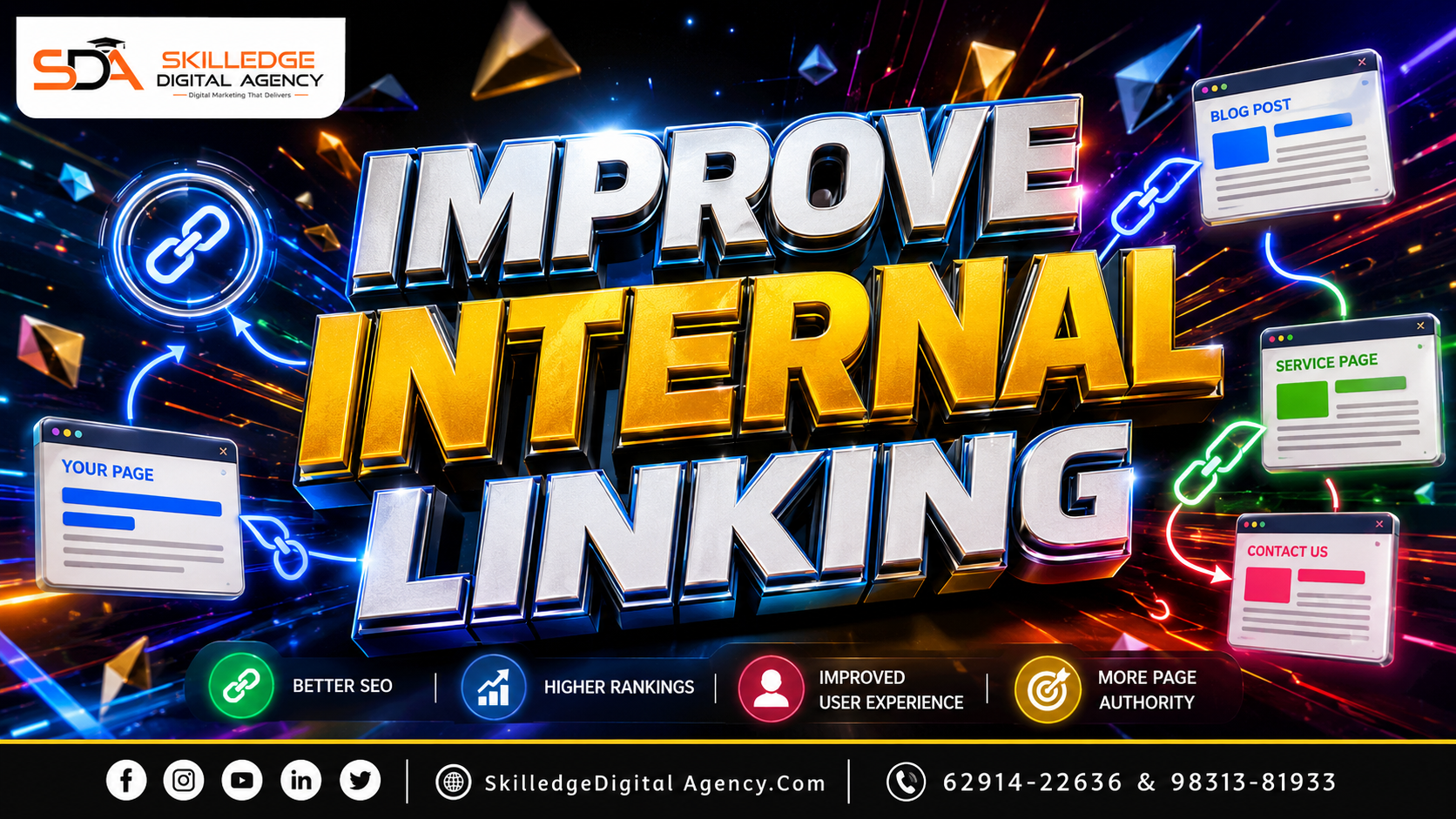
Internal linking is one of the most underused parts of a website audit. Moz points out that important pages should be discoverable within a few clicks and should not become orphan pages that are hard for crawlers to find. Internal links help distribute authority, guide users through the site, and clarify the relationship between pages.
For us at Skilledge Digital Agency, internal linking is also a storytelling tool. It lets us move readers from one useful topic to the next in a way that feels natural, not forced. That improves session depth and helps the site act more like a guided journey than a random collection of pages.
Better internal linking habits: How to do a basic SEO audit of your website
Use these practices:
Link from high-authority pages to priority pages.
Use descriptive anchor text.
Avoid generic anchors like “click here.”
Add related articles or related services sections.
Make sure important pages aren’t buried too deep.
Remove internal links that point to broken pages.
Good internal linking makes a site easier to explore, easier to understand, and easier to rank. It also helps your most important pages get discovered faster.
Decide what to fix first
After the audit, we need a priority map. Not every problem deserves equal attention, and not every fix will move the needle the same way. The best audits identify high-impact issues first, then group the rest into medium and low priority tasks.
Here’s a simple way to sort findings:
High priority: indexation blockers, major crawl errors, broken templates, severe performance issues.
Medium priority: duplicate metadata, weak internal linking, thin pages with traffic potential.
Low priority: minor copy edits, small UX refinements, secondary enhancements.
This is where many businesses waste time—fixing easy things before important things. At Skilledge Digital Agency, we’d always start where the rankings, traffic, and conversions are most likely to improve fastest.
Build your audit workflow: How to do a basic SEO audit of your website
A repeatable workflow turns SEO from a one-time cleanup into a system. A free seo audit can be incredibly useful, but only if it produces action. That means collecting findings in one place, assigning owners, and setting deadlines for fixes.
Use a shared spreadsheet or project board with these columns:
URL.
Issue type.
Severity.
Impact.
Recommended fix.
Owner.
Status.
Notes.
This keeps the process organized and makes it easier to report progress later. It also helps a team stay aligned when developers, content writers, and marketers need to work together.
Skilledge Digital Agency workflow
At Skilledge Digital Agency, we’d use this exact framework as a client-ready audit process because it connects diagnosis with action. We’d start with crawlability, move into on-page review, then examine content depth, backlinks, and performance in one unified sprint. The goal is not just to find issues; it’s to build a site that performs better for real people.
We’d also document every fix in language the client can understand. That matters because a great audit is only useful if it leads to clear decisions. In practical terms, that means fewer vague notes and more specific tasks like “remove noindex from service pages” or “rewrite duplicate product descriptions.”

Tools we rely on: How to do a basic SEO audit of your website
You don’t need a giant stack of tools to run a solid audit. Moz recommends analytics, Search Console, crawlers, and structured data testing tools as the foundation, while Yoast highlights Screaming Frog, Semrush, and Google Analytics as practical options for building a usable audit process. Search Console is especially valuable for indexation, performance, and inspection reports.
Use tools for clarity, not decoration. The best tool is the one that helps you make a decision faster. A simple audit with clear actions beats a complex audit that sits untouched in a folder.
Final audit mindset
A strong SEO audit is less about “finding everything” and more about finding what matters most. The real value comes from connecting technical health, content quality, and user experience into one practical plan. That’s what makes a seo technical audit useful for rankings and business growth, not just for reporting.
At Skilledge Digital Agency, we’d treat the audit as the start of strategy, not the end of it. When you fix the right issues in the right order, the site becomes easier to crawl, easier to trust, and easier to convert. That’s the outcome we want every time.
Skilledge Digital Agency

What Skilledge Digital Agency delivers for your brand
| Service / Feature | What you get | Included in |
|---|---|---|
Search Engine Optimization (SEO) | ||
Technical SEO Audit Site speed, crawlability, Core Web Vitals, schema markup | Faster rankings, zero penaltiesFull technical overhaul with monthly monitoring | All Plans |
Keyword Strategy & Mapping Competitor gap analysis + intent-based clustering | Traffic that convertsTarget buyers, not browsers | All Plans |
Authority Link Building White-hat backlinks from DA 40+ real publishers | Domain authority growthSustainable, Google-safe link profile | Growth+ |
Local & Hyperlocal SEO GMB optimization, citations, local schema | Dominate “near me” searchesMap pack visibility + local trust signals | All Plans |
Paid Advertising (PPC & Meta) | ||
Google Ads Management Search, Display, Shopping & Performance Max | 3–5× ROAS targetExpert bid strategy + A/B ad copy testing | Growth+ |
Meta / Instagram Ads Audience targeting, retargeting funnels, creative testing | Lower CPL, higher CTRFull-funnel Meta campaigns built to scale | Growth+ |
Landing Page Optimization CRO-focused pages designed to convert ad traffic | Higher Quality ScoreReduced bounce, better ad relevance | Elite |
Content Marketing | ||
SEO Blog & Article Writing Long-form, E-E-A-T optimized, topic cluster strategy | Organic traffic engineContent that ranks and drives leads for months | All Plans |
Short-form Video & Reels Script, shoot guidance, editing & platform optimization | Viral-ready contentBuilt for TikTok, Instagram & YouTube Shorts | Growth+ |
Content Calendar & Strategy 30/60/90-day editorial plan aligned to business goals | Consistent brand voiceNever run out of ideas or miss a moment | All Plans |
Social Media Management | ||
Platform Management (5 channels) IG, FB, LinkedIn, X, YouTube — posting & community | Active, engaged audienceDaily management + comment/DM response | Growth+ |
Social Media Analytics Reach, engagement rate, follower growth tracking | Data-backed decisionsMonthly performance deck with insights | All Plans |
Influencer Collaboration Micro to macro influencer identification & outreach | Social proof at scaleAuthentic reach to new, targeted audiences | Elite |
Email & CRM Marketing | ||
Email Campaign Management Design, copy, list segmentation & automation flows | 40%+ open ratesPersonalized sequences that nurture and close | Growth+ |
Marketing Automation Lead nurture, cart abandonment, re-engagement drips | Revenue on autopilotWorks 24/7 to move leads down the funnel | Elite |
Analytics, Reporting & Strategy | ||
Monthly Performance Reports Custom dashboards: traffic, leads, ROAS, rankings | Full transparency, no fluffKnow exactly what’s working and why | All Plans |
GA4 + Search Console Setup Full tracking configuration, event goals, attribution | Zero tracking blind spotsAccurate data from day one | All Plans |
Competitor Intelligence Quarterly deep-dive: gaps, opportunities, market share | Stay 3 steps aheadKnow what rivals do before they scale it | Elite |
Website & Conversion | ||
CRO — Conversion Rate Optimization Heatmaps, A/B tests, UX fixes, form optimization | More leads, same trafficTurn visitors into enquiries without extra ad spend | Elite |
Website Speed & Core Web Vitals Performance optimization, image compression, caching | Google loves fast sitesBetter UX, better bounce rate, better rankings | All Plans |
Ready to grow with Skilledge?Get a free audit & custom strategy — no obligation, no fluff. | ||
Skilledge Digital Agency
Phone/Whatsapp: +91 62914-22636 / 98313-81933
Email: Mktg@SkilledgeDigitalAcademy.Com
Website: www.skilledgedigitalacademy.com/services/