
Deciding how often to post on social media is one of the most common questions we hear at Skilledge Digital Agency. When you ask “how often should you post on social media,” you’re really asking: how do I maximize reach, engagement, and business outcomes without burning out my team or my audience? In this guide we’ll drop the one-size-fits-all advice and give you a tactical, tested framework you can apply across platforms.
Why frequency alone won’t fix growth: How Often Should You Post on Social Media
Frequency is an input, not a strategy. You can post every hour and still see flat growth if your content and audience fit are weak.
Platforms reward signal quality (engagement, watch time, time spent) more than raw volume. That means smart frequency supports a content strategy — it doesn’t replace one.
Over-posting can cause diminishing returns and audience fatigue; under-posting misses momentum. The sweet spot changes as your audience and goals evolve.
Our Core Framework: The 6-factor Frequency Decision Model: How Often Should You Post on Social Media
We use a simple model at Skilledge Digital Agency to choose publishing cadence. Each factor is a lever you can test and measure.
Audience availability
Who are they? Time zone, age, daily routines.
Primary metric to map: active hours vs. impression windows.
Content type & production capacity
High-effort (long-form video, filmed interviews) vs. low-effort (stories, reposts).
Capacity determines feasible cadence without sacrificing quality.
Platform algorithm behavior
Does the network prioritize recency, time spent, or history of engagement?
Example: X (Twitter) historically favors recency; Instagram now blends recency with relevance.
Business objective
Brand awareness needs consistent volume; conversion campaigns prioritize quality and targeted distribution.
Competitive context
What are your category leaders doing? Where are gaps and saturation?
Resource ROI
Cost-per-post in time and money vs. marginal lift in KPIs.

How we apply this model
Score each factor 1–5 for your brand.
Higher aggregate scores justify higher frequency; lower scores push toward concentrated, higher-quality posts.
Example scoring included: (audience 4, content capacity 3, algorithm 4, objective 5, competition 3, ROI 3) = total 22 → aim for mid-high cadence and a mix of repurposed and original assets.
Platform playbooks
Note: Each platform section uses synonyms like “posting cadence,” “post frequency,” and “how often should i post” in subheadings for SEO breadth.
Instagram — posting cadence, stories, Reels, and in-feed strategy: How Often Should You Post on Social Media
How often should you post on Instagram?
Feed posts: 3–5 per week for most small-mid brands. High-growth creators may post daily.
Reels: 3–7 short Reels per week; leaning heavier on Reels is what the algorithm currently rewards.
Stories: 3–10 per day when you have behind-the-scenes or timely content.
Why this works:
Reels drive discovery and follower growth; feed posts maintain brand aesthetic and save evergreen content.
Story frequency builds daily touch without saturating the main feed.
Practical schedule:
Monday: Reel (trend-related), Story batch (3)
Wednesday: Feed post (pillar content), Story (2)
Friday: Reel (how-to or short case), Story (3)
Production note: Repurpose a 3-minute interview into a Reel, carousel, and story snippets to maximize ROI.
Facebook — post frequency, groups, and long-tail reach: How Often Should You Post on Social Media
How often should you post to Facebook?
Pages: 3–7 times per week. Avoid excessive posting (more than once per day) unless you have a large, highly engaged community.
Groups: daily engagement often needed; 1–3 value posts per day depending on activity.
Why this works:
Facebook optimizes for meaningful interactions; concentrated, high-value posts with conversation prompts win.
Format mix: link posts (blog/landing pages), native video (short clips), images, live streams (monthly).
Use retargeting & engagement ads to amplify top-performing organic posts.
X (Twitter) — speed, cadence, and threads: How Often Should You Post on Social Media
How often should you post on Twitter?
Brands: 3–10 substantive tweets per day, including replies and threads for visibility.
Creators: 15–30+ micro-updates and engagement tweets daily if you’re growth-focused.
Why this works:
X rewards recency and conversation. Volume increases chance of discovery in fast-moving timelines.
Tactical split:
60% value/content, 20% engagement (polls/replies), 20% amplification (threads, link to long-form).
Example: A single pillar blog can generate 6–10 tweets over a week (quote tweets, stats, thread highlights).
LinkedIn — professional cadence and trust-building: How Often Should You Post on Social Media
How often should you post on LinkedIn?
3–5 posts per week for most professionals and brands. Daily posting works for thought leaders.
Why this works:
LinkedIn values meaningful professional content; long-form posts and document carousels perform well.
Content types: articles, document uploads, case studies, micro-insights, employee stories.
Tip: Encourage employees to share company posts to increase reach.
Pinterest — evergreen content and distribution rhythm: How Often Should You Post on Social Media
How often should you post on Pinterest?
5–30 pins per day is common for SMBs using automation; however 3–10 well-optimized pins daily can work for many brands.
Why this works:
Pinterest is search-driven and rewards consistent pinning and fresh creative.
Strategy:
Create multiple pins per asset with different titles/descriptions.
Pin at optimal times for your audience and refresh seasonal boards.
TikTok — virality, trends, and consistent posting: How Often Should You Post on Social Media
How often should you post on TikTok?
For growth: 1–3 videos per day (especially when trying to crack a niche).
For established brands: 3–7 times per week focusing on trends plus branded series.
Why this works:
TikTok favors fast iteration and testing; volume accelerates learning.
YouTube — depth, consistency, and audience retention: How Often Should You Post on Social Media
How often should you post on YouTube?
1 long-form video per week or 2 every fortnight is a strong baseline for channels focused on quality.
Short-form (YouTube Shorts): 3–10 per week to fuel discovery.
Why this works:
Watch time and session starts are primary signals; consistent schedule trains your audience.
Audience-first testing: experiments that actually move KPIs
We’ll walk through repeatable experiments you should run for 6–12 weeks.
Experiment 1: Frequency swap test
Hypothesis: Increasing reel posting from 2/week to 5/week improves follower growth by X% over 6 weeks.
Setup: Keep other variables constant (creative style, CTAs), measure weekly follower growth, reach, saves, and conversion events.
Sample size & timeframe: Minimum 6 weeks, compare to previous 6 weeks.
Experiment 2: Quality vs. Quantity A/B
Hypothesis: Two high-effort posts per week (deep value) generate higher conversions vs. daily low-effort posts.
Setup: Parallel accounts or rotate on same account with tracking links.
Experiment 3: Time-of-day clustering
Hypothesis: Concentrating posts during audience active hours gives better launch velocity.
Setup: Use analytics to find top 2 hours and concentrate publishing for 3 weeks.

How Skilledge Digital Agency runs tests: How Often Should You Post on Social Media
We define success metrics up front (lift in CTR, new leads, ROAS).
We segment by content type and use unique UTM parameters.
We avoid confounding variables like ad spikes or partnerships during test windows.
Content economics: how to sustain quality at scale: How Often Should You Post on Social Media
Content bucket system: Pillar content, derivative posts, micro-content, evergreen assets.
Rule of thumb: 1 pillar asset (video/article) → 5–15 micro-assets (short videos, carousels, captions).
Efficiency tip: Use a content matrix that maps pillar → 3 reels + 2 carousels + 5 stories + 6 tweets.
Outsourcing: Train a contractor using your style guide and a folder of templates to maintain voice.
Editorial calendar: 8-week rolling plan, weekly sprints, plus a 72-hour reactive slot for trends.
Scheduling, batching, and automation without sounding robotic: How Often Should You Post on Social Media
Batch produce: Record 4 short videos in one session, edit in template, publish across weeks.
Automation rules: Use scheduling for evergreen posts but keep 10–20% weekly live content to stay real.
Engagement windows: Schedule replies in first hour after publish — the algorithm rewards early engagement.
Measuring success: the metrics you must watch
Primary metrics by objective:
Awareness: impressions, reach, follower growth.
Engagement: likes, comments, shares, saves, watch time.
Conversion: CTR, leads, purchases, ROAS.
Retention: repeat engagement, session length, community growth.
Secondary metrics:CPM for organic reach when using paid amplification.
Cost per content asset (time + production cost).
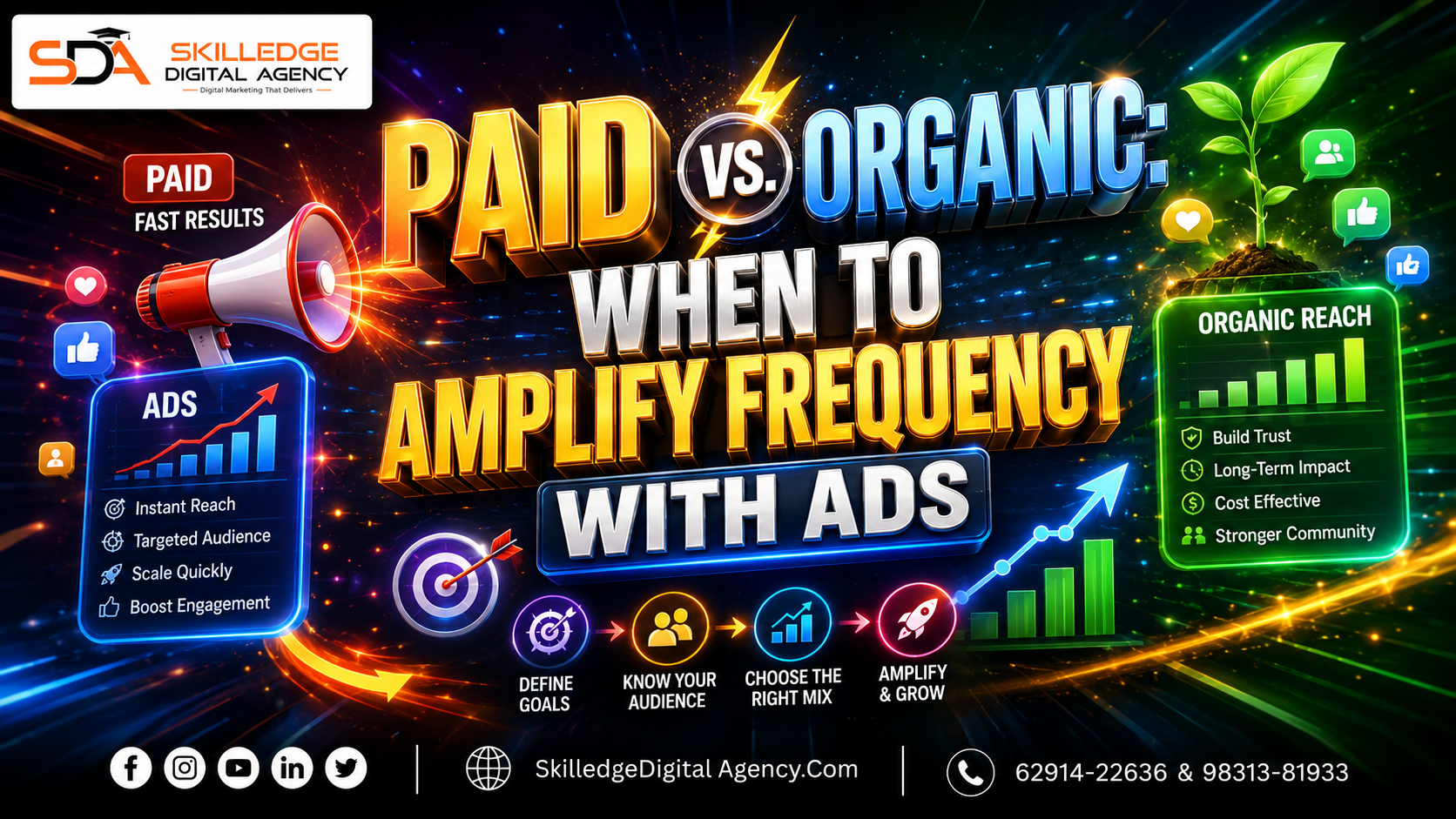
Paid vs. organic: when to amplify frequency with ads: How Often Should You Post on Social Media
Use paid to boost winners: promote posts that already show above-benchmark engagement.
Frequency with paid:
Test daily budget scaled to objective; if running multiple creatives, rotate them to avoid ad fatigue.
Creative budget split: 70% test creative, 30% scale winners.
Retargeting cadence: retarget users who engaged with content in the last 7–14 days.
Case studies & examples from Skilledge Digital Agency
Case Study A: Ecommerce apparel brand (results summary)
Problem: Low catalog sales despite weekly posts.
Hypothesis: Inconsistent Reels cadence and poor CTA.
Action: Increased Reels to 4/week, repurposed product shoots into 3 Reel formats, added a shoppable link in bio, ran a 7-day retargeting sequence.
Results: 38% increase in website sessions from social, 22% improvement in add-to-cart rate.
Case Study B: B2B SaaS (results summary)
Problem: Low demo signups from LinkedIn.
Hypothesis: LinkedIn posting was sporadic and lacked employee amplification.
Action: 4 posts/week (case studies, one-page explainer docs), created employee share kit, boosted top-performing posts.
Results: Demo requests up 49% in 8 weeks, CPL reduced by 27%.
Common mistakes and how we fix them: How Often Should You Post on Social Media
Mistake: Equating frequency with performance.
Fix: Prioritize signal-first content and test frequency as a scaler.
Mistake: No hypothesis for testing.
Fix: Always define a measurable hypothesis and timeframe.
Mistake: Over-optimizing for vanity metrics.
Fix: Tie metrics to business outcomes with UTM and tracking.
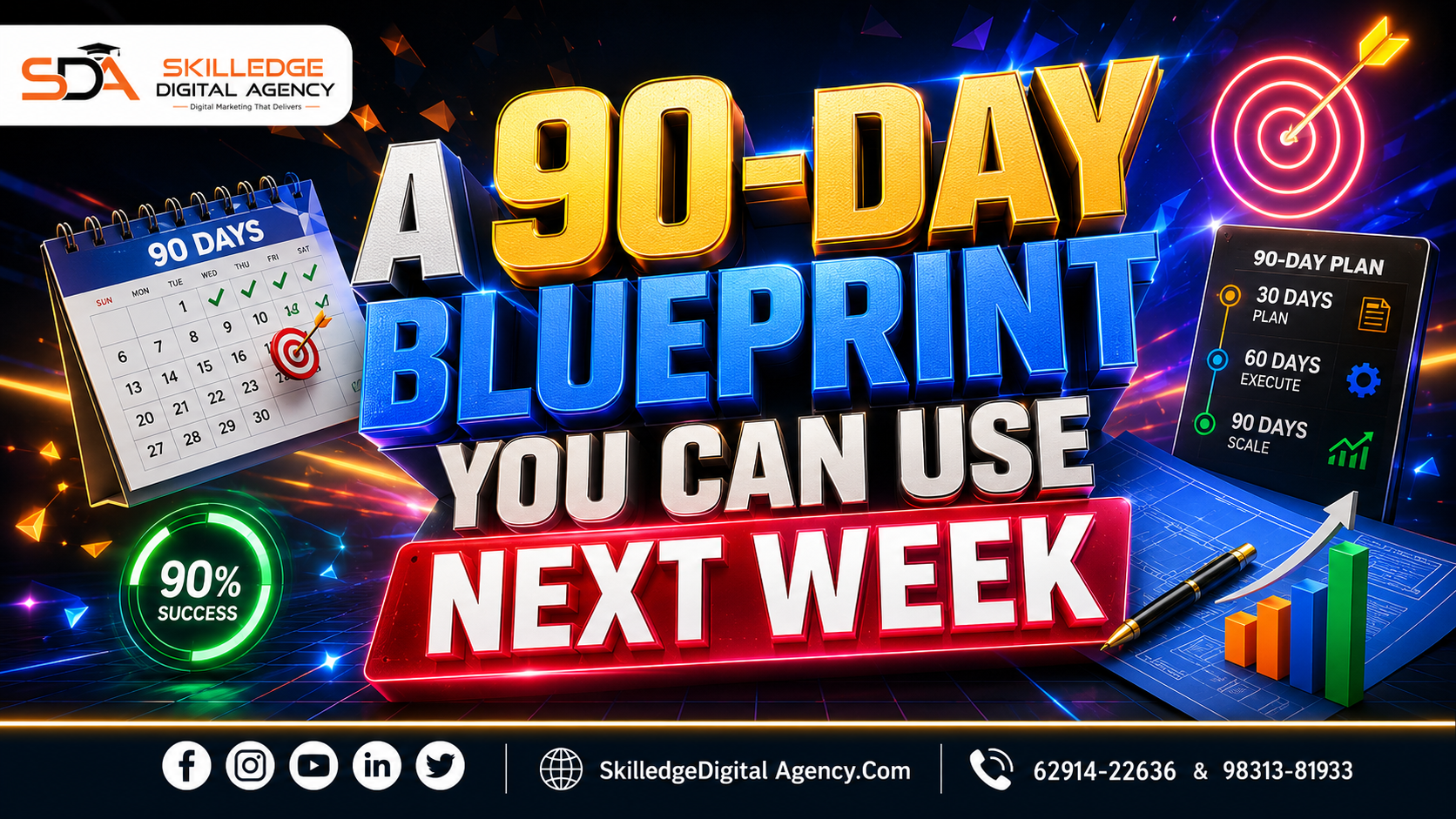
A 90-day blueprint you can use next week: How Often Should You Post on Social Media
Weeks 1–2: Audit & baseline
Audit current cadence, content buckets, and KPIs.
Score using the 6-factor model and pick 1 platform to focus.
Weeks 3–6: Test phase (pick two experiments)
Run Frequency Swap Test and Time-of-day clustering.
Produce pillar content and repurpose into 6 micro-assets per week.
Weeks 7–10: Scale winners
Double down on formats that move KPIs.
Start low-budget paid amplification on top 2 assets.
Weeks 11–12: Optimize and formalize
Build ops: SOPs, templates, and a 12-week rolling plan.
Document wins and retention strategies.
Tools, templates, and resources
Scheduling: Buffer, Later, Hootsuite, or Skilledge’s recommended stack.
Analytics: native platform insights + GA4 + UTM builder.
Repurposing: Descript for repurposing long video into clips.
Creative templates: Canva, Figma for templates and batch edits.
Image suggestions
Featured image: marketing calendar with platform icons (as listed earlier).
Supporting images: posting cadence charts, A/B test setup screenshot, sample editorial calendar.
Skilledge Digital Agency

What Skilledge Digital Agency delivers for your brand
| Service / Feature | What you get | Included in |
|---|---|---|
Search Engine Optimization (SEO) | ||
Technical SEO Audit Site speed, crawlability, Core Web Vitals, schema markup | Faster rankings, zero penaltiesFull technical overhaul with monthly monitoring | All Plans |
Keyword Strategy & Mapping Competitor gap analysis + intent-based clustering | Traffic that convertsTarget buyers, not browsers | All Plans |
Authority Link Building White-hat backlinks from DA 40+ real publishers | Domain authority growthSustainable, Google-safe link profile | Growth+ |
Local & Hyperlocal SEO GMB optimization, citations, local schema | Dominate “near me” searchesMap pack visibility + local trust signals | All Plans |
Paid Advertising (PPC & Meta) | ||
Google Ads Management Search, Display, Shopping & Performance Max | 3–5× ROAS targetExpert bid strategy + A/B ad copy testing | Growth+ |
Meta / Instagram Ads Audience targeting, retargeting funnels, creative testing | Lower CPL, higher CTRFull-funnel Meta campaigns built to scale | Growth+ |
Landing Page Optimization CRO-focused pages designed to convert ad traffic | Higher Quality ScoreReduced bounce, better ad relevance | Elite |
Content Marketing | ||
SEO Blog & Article Writing Long-form, E-E-A-T optimized, topic cluster strategy | Organic traffic engineContent that ranks and drives leads for months | All Plans |
Short-form Video & Reels Script, shoot guidance, editing & platform optimization | Viral-ready contentBuilt for TikTok, Instagram & YouTube Shorts | Growth+ |
Content Calendar & Strategy 30/60/90-day editorial plan aligned to business goals | Consistent brand voiceNever run out of ideas or miss a moment | All Plans |
Social Media Management | ||
Platform Management (5 channels) IG, FB, LinkedIn, X, YouTube — posting & community | Active, engaged audienceDaily management + comment/DM response | Growth+ |
Social Media Analytics Reach, engagement rate, follower growth tracking | Data-backed decisionsMonthly performance deck with insights | All Plans |
Influencer Collaboration Micro to macro influencer identification & outreach | Social proof at scaleAuthentic reach to new, targeted audiences | Elite |
Email & CRM Marketing | ||
Email Campaign Management Design, copy, list segmentation & automation flows | 40%+ open ratesPersonalized sequences that nurture and close | Growth+ |
Marketing Automation Lead nurture, cart abandonment, re-engagement drips | Revenue on autopilotWorks 24/7 to move leads down the funnel | Elite |
Analytics, Reporting & Strategy | ||
Monthly Performance Reports Custom dashboards: traffic, leads, ROAS, rankings | Full transparency, no fluffKnow exactly what’s working and why | All Plans |
GA4 + Search Console Setup Full tracking configuration, event goals, attribution | Zero tracking blind spotsAccurate data from day one | All Plans |
Competitor Intelligence Quarterly deep-dive: gaps, opportunities, market share | Stay 3 steps aheadKnow what rivals do before they scale it | Elite |
Website & Conversion | ||
CRO — Conversion Rate Optimization Heatmaps, A/B tests, UX fixes, form optimization | More leads, same trafficTurn visitors into enquiries without extra ad spend | Elite |
Website Speed & Core Web Vitals Performance optimization, image compression, caching | Google loves fast sitesBetter UX, better bounce rate, better rankings | All Plans |
Ready to grow with Skilledge?Get a free audit & custom strategy — no obligation, no fluff. | ||
Skilledge Digital Agency
Phone/Whatsapp: +91 62914-22636 / 98313-81933
Email: Mktg@SkilledgeDigitalAcademy.Com
Website: www.skilledgedigitalacademy.com/services/
Get Directions
Facebook
Twitter/X
Instagram
LinkedIn