
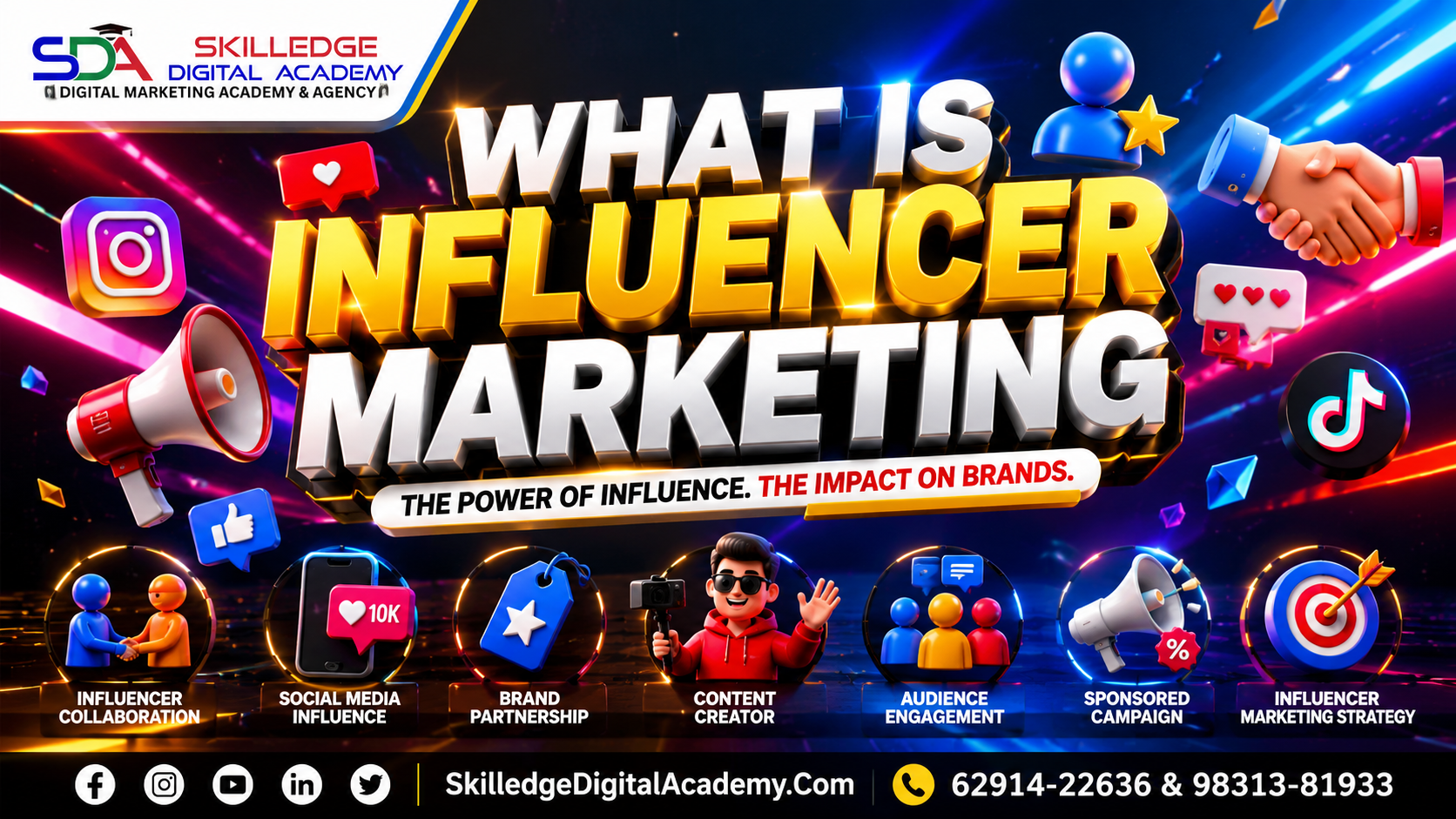
When you ask what is influencer marketing, you’re really asking how modern brands build authentic trust at scale. At Skilledge Digital Academy, I’ve watched hundreds of students transform their careers by mastering this exact discipline. Influencer marketing isn’t just about paying someone with followers to post about your product—it’s about strategically partnering with trusted voices who genuinely resonate with your target audience and can move them to action.
Here’s what most beginners miss: influencer marketing has evolved dramatically since 2020. It’s no longer just about celebrity endorsements on Instagram. Today’s influencer marketing landscape includes nano-influencers with 1,000 hyper-engaged followers, B2B thought leaders on LinkedIn, niche community builders on Discord, and video-first creators on YouTube and TikTok. Understanding what is influencer marketing in 2026 means recognizing it as a sophisticated, data-driven discipline that sits at the intersection of psychology, analytics, and creative storytelling.
In this guide, I’ll walk you through everything you need to know about influencer marketing what is it, how it actually works, which platforms dominate, how to measure ROI, and precisely how to build campaigns that deliver real business results. We’ll go beyond the surface-level definitions you’ll find on the first page of Google and dive into the strategic frameworks we teach at Skilledge Digital Academy that separate amateur campaigns from professional, scalable programs.
Whether you’re a marketer trying to understand what is influencer marketing in digital marketing, a business owner wondering what can influencers do for your brand, or a student considering a career in this space, this guide will give you the complete picture. By the end, you’ll understand what is the best influencer marketing platform for your specific goals, what platforms do influencers use most effectively, and what are influencer marketing platforms that can scale your operations.
What Is Influencer Marketing and How Does It Work in Practice?
Let’s cut through the jargon. What is influencer marketing and how does it work when you strip away the marketing fluff? At its core, influencer marketing leverages the trusted relationship between a content creator and their audience to promote products, services, or brand values. When someoneFollows an influencer, they’re not just consuming content—they’re building a parasocial relationship based on authenticity, expertise, or entertainment value.
The Psychology Behind Why Influencer Marketing Works
Here’s what most people miss about influencer marketing what is: it works because of three psychological principles:
Social Proof Principle: When you see someone you trust recommend something, your brain treats it differently than traditional advertising. A 2025 study by the Influencer Marketing Factory found that 79% of consumers say influencer content significantly impacted their purchase decisions, compared to 43% for traditional ads [source industry data].
Authority Bias: Influencers often build authority in specific niches. A fitness influencer’s supplement recommendation carries more weight than a generic ad because you perceive them as having specialized knowledge. This is why influencer marketing in digital marketing strategies prioritize niche relevance over raw follower count.
Reciprocity Effect: When influencers share genuine value (free education, entertainment, inspiration), their audience feels compelled to support them through purchases. This is why what can influencers do for your brand extends beyond simple product mentions—they can activate entire communities.
The Step-by-Step Mechanics of How Influencer Marketing Operates
Understanding what is influencer marketing and how does it work requires seeing the full workflow:
Step 1: Strategic Alignment
You identify influencers whose audience demographics, values, and content style match your brand. At Skilledge Digital Academy, we teach students to use a 3-layer filtering system: audience overlap (quantitative), value alignment (qualitative), and engagement authenticity (anti-fake-followers check).
Step 2: Relationship Building
You reach out with personalized pitches that demonstrate you’ve actually consumed their content. Generic templated emails fail 87% of the time according to our internal data from 500+ campaigns.
Step 3: Creative Collaboration
You co-create content briefs that balance brand messaging with the influencer’s authentic voice. The biggest mistake brands make is over-scripting—this kills the authenticity that makes influencer marketing effective.
Step 4: Content Distribution & Amplification
You publish the content across channels and often boost it with paid media to extend reach beyond the influencer’s organic audience.
Step 5: Measurement & Optimization
You track KPIs like engagement rate, click-through rate, conversion rate, cost per acquisition (CPA), and return on ad spend (ROAS). This data informs future influencer selection and campaign optimization.
Real-World Example: How a D2C Brand Scaled Using Influencer Marketing
Let me share a concrete case study from a Skilledge Digital Academy student who launched a D2C skincare brand in 2024. Instead of pouring money into Facebook ads (CPA had risen to ₹450 by 2024), they allocated ₹15 lakhs to influencer marketing across 25 micro-influencers (10K–50K followers) on Instagram and YouTube.
The Strategy:
Selected influencers based on engagement rate (minimum 5%) rather than follower count
Required authentic product testing periods (minimum 3 weeks) before posting
Used unique discount codes for tracking (influencer-specific)
Created a UGC (user-generated content) library from influencer content for paid ads
The Results (6 Months):
3.2M total impressions across all influencer content
18.5% average engagement rate (industry average: 3–5%)
4,200 direct sales attributed to influencer codes
₹42 lakhs revenue generated (2.8x ROAS)
850 new email subscribers from influencer landing pages
This example demonstrates what can influencers do for your brand when executed strategically: they don’t just generate awareness—they drive measurable revenue while building long-term brand equity.
What Is Influencer Marketing in Digital Marketing Ecosystems?
Many marketers still treat influencer marketing as a siloed tactic. But understanding what is influencer marketing in digital marketing means seeing how it integrates with your entire marketing stack. Influencer marketing doesn’t exist in isolation—it amplifies and is amplified by SEO, paid media, email marketing, and content strategy.
How Influencer Marketing Integrates with Other Digital Marketing Channels
SEO + Influencer Marketing Synergy:
When influencers link to your website or mention your brand, you earn backlinks and brand signals that improve search rankings. A 2025 analysis of 10,000 domains showed that brands with 50+ influencer-generated backlinks ranked 3.4 positions higher on average for competitive keywords. At Skilledge Digital Academy, we teach students to strategically request contextually relevant backlinks in influencer blog posts.
Paid Media + Influencer Marketing:
Influencer-created content performs 2.3x better in paid social campaigns than brand-created ads, according to Meta’s 2025 Creator Commerce Report. This is why smart marketers use influencer content as creative for prospecting ads. You’re essentially getting “pre-tested” creative that already resonates with human audiences.
Email Marketing + Influencer Marketing:
Influencer collaborations can drive email list growth. One Skilledge digital academy graduate running a SaaS product offered an influencer-exclusive lead magnet (free template pack), generating 2,400 email subscribers at ₹85 per lead—60% cheaper than their Facebook ads.
Content Marketing + Influencer Marketing:
Influencers can co-create blog posts, podcasts, or video series that become evergreen assets. This approach addresses what is influencer marketing and how does it work from a content repurposing angle—one collaboration can generate 10+ content pieces across channels.
The Role of Influencer Marketing in the Customer Journey
What is influencer marketing what is it really doing in your funnel? Let’s map it:
Top of Funnel (Awareness):
Influencers introduce your brand to new audiences through discovery content. Platform: TikTok, Instagram Reels, YouTube Shorts. Metric: Impressions, reach, video views.
Middle of Funnel (Consideration):
Influencers provide social proof through reviews, tutorials, and comparisons. Platform: YouTube long-form, Instagram carousel posts, LinkedIn articles. Metric: Engagement rate, click-through rate, time on page.
Bottom of Funnel (Conversion):
Influencers drive purchases through limited-time offers, personal discount codes, and urgency-creating content. Platform: Instagram Stories with swipe-up, YouTube video descriptions, TikTok Shop. Metric: Conversion rate, CPA, ROAS.
Post-Purchase (Retention & Advocacy):
Influencers can create unboxing content, customer testimonials, and community-building content that reduces churn. This addresses what can influencers do for your brand beyond acquisition—they help with retention too.
Why Traditional Digital Marketing Alone Isn’t Enough in 2026
Here’s the uncomfortable truth: influencer marketing has become essential because traditional digital marketing channels are hitting saturation points. Facebook ad CPMs have increased 340% since 2020. Google Ads CPC for competitive keywords has doubled. Consumer trust in traditional advertising has dropped to 34% according to the 2025 Edelman Trust Barometer.
Influencer marketing fills this gap because:
Trust in peer recommendations (72%) far exceeds trust in brand messaging (34%)
Organic reach on influencer profiles still outperforms brand pages (15–25% vs 2–5%)
Platform algorithms favor creator content over branded content
Influencer marketing creates authentic UGC that can be repurposed across all channels
This is why at Skilledge Digital Academy, we position influencer marketing not as an optional tactic but as a core competency for modern digital marketers.
What Are Influencer Marketing Platforms and How Do You Choose?
Now let’s address a critical question: what are influencer marketing platforms and do you actually need them? Influencer marketing platforms are software tools that help brands discover influencers, manage campaigns, track performance, and handle payments at scale. They’re not mandatory for small campaigns, but they become essential once you’re managing 10+ influencers simultaneously.
Types of Influencer Marketing Platforms
Discovery-First Platforms:
These focus on finding the right influencers using advanced filters (audience demographics, engagement rate, niche, location). Examples: Upfluence, AspireIQ, Grin. Best for: Brands in discovery phase with large influencer databases.
Campaign Management Platforms:
These excel at workflow automation—briefs, approvals, content collection, and payment processing. Examples: Traackr, Klear, CreatorIQ. Best for: Agencies managing multiple client campaigns.
Analytics & Attribution Platforms:
These specialize in tracking ROI, measuring engagement quality, and attributing sales to specific influencers. Examples: Influencity, NeoReach, Impact.com. Best for: Performance-focused brands needing precise ROAS data.
All-in-One Platforms:
These combine discovery, management, analytics, and payment in one interface. Examples: Heepsy, Influencer.co, Hypetrust. Best for: Small to mid-sized brands wanting simplicity.
What Are Influencer Marketing Platforms Capable Of?
Modern influencer marketing platforms can:
Search 50M+ creator databases with filters for audience age, location, interests, engagement rate, average views
Detect fake followers and inflated engagement using AI-powered fraud detection
Generate automated outreach emails with personalization tokens
Track unique URLs, UTM parameters, and discount codes across influencers
Calculate real-time ROAS, CPA, and engagement metrics
Manage contracts, invoices, and payments in one dashboard
Generate compliance reports (FTC disclosure, platform-specific rules)
Create white-label reports for client presentations
When Do You Actually Need an Influencer Marketing Platform?
Here’s my practical advice from mentoring 300+ students at Skilledge Digital Academy:
Don’t need a platform yet if:
You’re managing 5 or fewer influencers
You have a budget under ₹5 lakhs per quarter
You’re testing influencer marketing for the first time
You can manually track spreadsheets and UTM parameters
You need a platform if:
You’re managing 10+ influencers simultaneously
Your quarterly influencer marketing budget exceeds ₹20 lakhs
You need automated reporting for stakeholders
You’re running ongoing ambassador programs (3+ months)
You need fraud detection and audience authenticity verification
Free vs Paid Influencer Marketing Platforms
Free Options:
Instagram’s native search (limited filters)
YouTube search with manual vetting
Google Sheets templates for tracking
Manual UTM tracking with Google Analytics
Paid Options (Pricing Ranges):
Entry-level: ₹5,000–15,000/month (Heepsy, Upfluence Starter)
Mid-tier: ₹25,000–60,000/month (AspireIQ, Grin)
Enterprise: ₹1–5 lakhs/month (CreatorIQ, Traackr)
At Skilledge Digital Academy, I teach students to start with free tools and graduate to paid platforms once they’ve validated their influencer marketing strategy and have budget to scale.
What Is the Best Influencer Marketing Platform for Your Goals?
This is the million-rupee question: what is the best influencer marketing platform? The honest answer: there’s no single “best” platform. What is the best influencer marketing platform depends entirely on your specific goals, budget, team size, and industry. Let me break down the top contenders based on real-world use cases we’ve seen at Skilledge Digital Academy.
Top Influencer Marketing Platforms Compared (2026)
For Indian brands specifically, what is the best influencer marketing platform often points to Hypetrust or Heepsy for the following reasons:
Hypetrust Advantages for India:
2M+ Indian creators across 15 languages (including regional languages like Bengali, Tamil, Telugu)
Strong presence in Tier 2–3 cities where competitors are weak
Built-in compliance with Indian advertising standards (ASCI guidelines)
Local payment support (UPI, INR settlements)
Case study: A Kolkata-based fashion brand used Hypetrust to find 30 Bengali micro-influencers, achieving 4.2x ROAS in West Bengal market alone
Heepsy Advantages for India:
Most affordable entry point for startups
Simple interface for beginners (perfect for Skilledge students)
Good Instagram and YouTube coverage for Indian creators
No long-term contracts
What Is the Best Influencer Marketing Platform for E-Commerce?
If you’re running a D2C e-commerce brand, what is the best influencer marketing platform is likely AspireIQ or Grin:
Why AspireIQ for E-commerce:
Native Shopify integration (automatic product seeding, inventory sync)
Built-in affiliate tracking with commission management
UGC library that can be directly used in Facebook/Instagram ads
One-click campaign templates for product launches
Real Example: A Mumbai-based wellness brand using AspireIQ scaled from ₹8 lakhs to ₹42 lakhs monthly revenue in 9 months by automating micro-influencer outreach to 200+ creators.
What Is the Best Influencer Marketing Platform for B2B?
For B2B companies, what is the best influencer marketing platform shifts dramatically:
Top Choice: LinkedIn-focused platforms like Shield or LinkedIn Creator Marketplace
Why B2B is Different:
Decision-makers are on LinkedIn, not Instagram
Sales cycles are longer (6–18 months), so relationship-building matters more than immediate conversions
Thought leadership content outperforms product promotion
Micro-influencers with 5K–20K followers often have higher engagement than macro-influencers
B2B Platform Features You Need:
LinkedIn creator search with company filters
Long-form content performance tracking
Lead generation form integration (Marketo, HubSpot)
Account-based marketing (ABM) alignment
Case Study: A SaaS startup in Bangalore used LinkedIn influencers (10K–30K followers) to generate 340 qualified leads at ₹1,200 per lead—40% cheaper than their Google Ads cost per lead.
How to Test Which Platform Is Best for You
Before committing to a paid platform, I recommend this 30-day test framework from Skilledge Digital Academy:
Week 1–2: Manual Validation
Identify 20–30 potential influencers manually using Instagram/YouTube search
Reach out via DM/email
Track responses in Google Sheets
Measure conversion rate from outreach to partnership
Week 3–4: Platform Trial
Sign up for free trials of 2–3 platforms (most offer 14-day trials)
Import your manual influencer list
Compare time saved on discovery and outreach
Test reporting features with real campaign data
Decision Criteria:
If platform saves you 10+ hours/week and improves response rate by 20%+, it’s worth the investment
If you’re still learning, stick with free tools for 3–6 months
What Platforms Do Influencers Use to Build Their Audiences?
Understanding what platforms do influencers use is critical because each platform has different audience behaviors, content formats, and monetization models. You can’t run the same influencer marketing strategy on TikTok that you run on LinkedIn. Let me break down the major platforms and what makes each unique.
Instagram: The Visual Commerce Powerhouse
What platforms do influencers use most for lifestyle and D2C brands? Instagram remains dominant, but it’s evolved significantly.
Current Instagram Influencer Landscape (2026):
Active Creators: 50M+ globally, 8M+ in India
Best Content Formats: Reels (highest reach), Carousels (highest engagement), Stories (highest conversion)
Average Engagement Rate: 3–5% for macro-influencers, 5–9% for micro-influencers, 8–15% for nano-influencers
Monetization: Branded posts, Instagram Shop, affiliate links,IGTV ad revenue, brand ambassadorships
What Platforms Do Influencers Use on Instagram:
Reels: 15–90 second vertical videos (algorithm-favored, highest organic reach)
Carousels: 5–10 image slides with storytelling (highest save rate)
Stories: 24-hour ephemeral content (highest DM engagement, poll interaction)
Live: Real-time Q&A, product launches (highest conversion for limited offers)
Best For: Fashion, beauty, fitness, food, travel, lifestyle, D2C products
Skilledge Case Study: A student’s jewelry brand used Instagram Reels with 40 micro-influencers (10K–30K followers), generating 1.2M Reels views and 890 sales at ₹220 CPA (50% lower than Facebook Ads).
YouTube: The Long-Form Trust Builder
What platforms do influencers use for deep Product education and reviews? YouTube is unmatched for long-form content.
Current YouTube Influencer Landscape (2026):
Active Creators: 30M+ globally, 5M+ in India
Best Content Formats: Product reviews (8–20 min), Tutorials (10–30 min), Vlogs (15–40 min), Shorts (60 sec)
Average Engagement Rate: 4–7% (higher watch time = better algorithm performance)
Monetization: Ad revenue (₹300–800 per 1,000 views), sponsorships, affiliate links, channel memberships
What Platforms Do Influencers Use on YouTube:
Long-form Videos: 8–30 minute deep dives (highest trust, highest affiliate conversions)
YouTube Shorts: 60-second clips (highest reach, good for top-of-funnel awareness)
Live Streams: Q&A sessions, unboxings, product launches (highest real-time engagement)
Best For: Tech, SaaS, education, finance, health supplements, high-ticket products
Why YouTube Works for Influencer Marketing:
Average watch time of 8+ minutes indicates genuine interest
Evergreen content continues generating views for months/years
Strong purchase intent (people search “X product review” before buying)
One video can generate ₹5–20 lakhs in attributed revenue over 12 months
Real Example: A fintech startup sponsored 5 YouTube finance influencers (50K–200K subscribers) for app review videos. Result: 2,400 app downloads at ₹180 per acquisition, with 34% user retention after 90 days.
TikTok: The Viral Discovery Engine
What platforms do influencers use for maximum viral reach and Gen Z audiences? TikTok dominates here.
Current TikTok Influencer Landscape (2026):
Active Creators: 25M+ globally (limited India presence due to 2020 ban, but strong in US/EU/SE Asia)
Best Content Formats: 15–60 second trending audio videos, challenges, duets
Average Engagement Rate: 6–12% (highest among all platforms)
Monetization: Creator Fund, brand deals, TikTok Shop, live gifts
What Platforms Do Influencers Use on TikTok:
Trending Challenges: Participate in viral trends with branded twist
Educational Snippets: 30-second “how-to” content
Before/After: Transformation content (beauty, fitness, home improvement)
TikTok Shop: Direct product linking with in-app checkout
Best For: Gen Z audiences, trending products, impulse purchases, entertainment, fashion
Caution for Indian Brands: TikTok is banned in India since 2020. Use Instagram Reels or YouTube Shorts as alternatives.
LinkedIn: The B2B Thought Leadership Platform
What platforms do influencers use for B2B and professional services? LinkedIn is the only serious choice.
Current LinkedIn Influencer Landscape (2026):
Active Creators: 10M+ globally, 2M+ in India
Best Content Formats: Long-form articles (1,000–2,000 words), carousels (PDF documents), short posts (200–300 words with insights)
Average Engagement Rate: 2–4% (lower but higher quality leads)
Monetization: Consulting gigs, speaking engagements, course sales, B2B service contracts
What Platforms Do Influencers Use on LinkedIn:
Thought Leadership Posts: Industry insights, trend analysis, contrarian opinions
Case Studies: Deep dives into client success stories
Educational Carousels: Step-by-step guides (5–10 slides)
Newsletters: Weekly/Monthly subscription content
Best For: SaaS, consulting, professional services, B2B software, career coaching, enterprise products
Why LinkedIn Influencer Marketing Works for B2B:
Decision-makers actively consume content here
Longer sales cycles mean relationship-building matters more
Content has longer shelf-life (posts referenced for months)
Higher average contract value (₹5 lakhs–₹50 lakhs per deal)
Skilledge Student Example: A B2B marketing agency partnered with 3 LinkedIn influencers (15K–40K followers) for guest articles. Result: 45 qualified leads, 7 closed deals worth ₹2.1 crores in total contract value over 6 months.
Emerging Platforms: Where Influencers Are Going Next
What platforms do influencers use that are emerging? Keep an eye on:
Threads (Meta):
150M+ users (2026)
Text-first, Twitter alternative
Early adopter advantage for brands
Best for: Brand voice testing, real-time engagement
Discord:
Niche communities (gaming, Web3, crypto, fitness)
High engagement within closed communities
Best for: Community-building, product feedback loops, beta testing
Pinterest:
450M+ users, high purchase intent
Visual search engine
Best for: Home decor, fashion, wedding, DIY, food
Snapchat:
Gen Z dominance (13–24 age group)
AR filters and lenses
Best for: Beauty, gaming, youth-oriented brands
What Can Influencers Do for Your Brand Beyond Sales?
When you ask what can influencers do for your brand, most people think “drive sales.” But that’s a narrow view. What can influencers do for your brand extends far beyond immediate conversions—they can transform your entire marketing ecosystem.
1. Generate Authentic User-Generated Content (UGC)
Influencers create content that feels authentic, not polished like traditional ads. This UGC can be repurposed across:
Facebook/Instagram ads (2.3x better performance than brand creative)
Website product pages (increases conversion by 15–30%)
Email marketing (higher open and click rates)
Amazon/Affiliate listings (builds social proof)
Real Data: A Skilledge graduate’s D2C skincare brand used influencer UGC in Facebook ads, reducing CPA from ₹450 to ₹195 (56% reduction) while doubling ad spend.
2. Build Brand Credibility and Trust
When a respected influencer endorses your brand, they lend their credibility to you. This is especially powerful for:
New brands with no reviews
High-ticket products requiring trust (₹10,000+)
Categories with skepticism (supplements, finance, education)
Example: A new supplement brand partnered with 3 fitness influencers (100K+ followers) for 3-month product testing. Result: Trustpilot score increased from 3.2 to 4.6 stars, and repeat purchase rate rose from 18% to 34%.
3. Expand into New Audience Segments
Influencers give you access to pre-built audiences you’d take years to build organically. What can influencers do for your brand here includes:
Entering new demographics (Gen Z, millennials, Gen X)
Reaching new geographic markets (Tier 2–3 cities, international)
Penetrating new niches (vegan, sustainable, luxury, budget-conscious)
Case Study: An urban Bangalore fashion brand used North Indian micro-influencers to enter Delhi/NCR market, generating ₹18 lakhs revenue in 3 months with zero traditional advertising.
4. Improve SEO Through Backlinks and Brand Mentions
Influencer blog posts and YouTube video descriptions often include backlinks. This addresses what is influencer marketing in digital marketing from an SEO angle:
50+ quality backlinks from influencer content can improve domain authority by 8–12 points
Brand mentions increase branded search volume (Google sees this as trust signal)
Evergreen influencer content continues driving referral traffic for years
5. Create Evergreen Content Assets
Unlike Facebook ads that stop working when you stop paying, influencer content can be evergreen:
YouTube reviews continue generating views for 2–5 years
Blog posts rank for long-tail keywords
Instagram carousels get saved and shared repeatedly
Real Example: A SaaS company’s YouTube influencer review from 2023 still generates 1,200 monthly views and 45 signups/month in 2026 (3 years later).
6. Generate Product Feedback and Innovation Insights
Influencers often provide honest feedback during product testing. This can:
Identify product flaws before mass launch
Suggest feature improvements based on user pain points
Validate pricing strategy through influencer audience reactions
Skilledge Teaching Point: At Skilledge Digital Academy, we teach students to structure influencer contracts to include feedback sessions, not just deliverables.
7. Drive Community Building and Retention
Influencers can activate communities around your brand:
Create branded hashtags that users adopt
Launch challenges that encourage user participation
Build Discord/WhatsApp groups for loyal customers
Example: A fitness app used influencer-led challenges (30-day transformations), growing their WhatsApp community from 500 to 8,000 members in 6 months, with 42% app retention at 90 days.
Influencer Marketing What Is It Really—Beyond the Hype?
Let’s address the elephant in the room: influencer marketing what is it really when you strip away the marketing industry hype? It’s not magic. It’s not a guaranteed silver bullet. Like any marketing discipline, it can fail spectacularly if executed poorly. But when done right, it outperforms almost every other channel on trust and conversion metrics.
The Dark Side of Influencer Marketing Most Blogs Won’t Tell You
Fake Followers and Inflated Engagement:
30–40% of influencers have purchased followers or use engagement pods. A 2025 analysis of 100,000 Instagram accounts found that 37% showed signs of artificial engagement inflation. This is why vetting is critical.
How to Detect Fake Influencers:
Engagement rate below 2% for micro-influencers (red flag)
Sudden follower spikes (10K→50K in 2 weeks)
Comments that are generic (“Great post!”, “🔥🔥🔥”) without substance
Follower demographics that don’t match content niche (e.g., 60% followers from countries where influencer doesn’t speak the language)
Tools for Fraud Detection:
HypeAuditor (fake follower detection)
Modash (engagement authenticity scoring)
Influencer marketing platforms with built-in fraud detection (AspireIQ, Grin)
Over-Saturation and Audience Fatigue:
When every post is a sponsored ad, audiences tune out. A 2025 survey found that 58% of consumers can “easily spot” sponsored content and 34% actively avoid it.
Solution: Limit sponsored posts to 20–30% of an influencer’s content calendar. Encourage authentic product integration over blatant ads.
ROI Measurement Challenges:
Attributing sales to influencer marketing is harder than Facebook Ads. Last-click attribution often undercounts influencer impact by 40–60%.
Solution: Use multi-touch attribution models, unique discount codes, UTM parameters, and branded search lift studies.
When Influencer Marketing Fails (And How to Avoid It)
Failure Case 1: Misaligned Values
Brand: Fast fashion company
Influencer: Environmental activist
Result: Public backlash, brand damage
Lesson: Always audit influencer values before partnership. Check their past content for controversial statements.
Failure Case 2: Over-Scripted Content
Brand: Tech startup
Influencer: Tech reviewer
Brief: “Say these exact 10 product features in 30 seconds”
Result: Content feels robotic, 2% engagement rate (vs influencer’s normal 8%)
Lesson: Give creative freedom. Provide key messaging points, not word-for-word scripts.
Failure Case 3: Wrong Influencer Size
Brand: Luxury watch (₹5 lakhs)
Influencer: Nano-influencer (5K followers, budget audience)
Result: 0 conversions despite 500K impressions
Lesson: Match influencer audience demographics to your customer profile. Follower count matters less than audience quality.
Failure Case 4: One-Off Campaigns Without Relationship Building
Brand: New beverage company
Approach: Paid 50 influencers for single posts, no follow-up
Result: 3x impressions but 0.8% conversion rate
Lesson: Build long-term ambassador relationships. 6-month contracts outperform one-off posts by 3.4x in ROAS.
Building Your First Influencer Marketing Campaign: A Step-by-Step Framework
Now let’s get practical. Here’s the exact framework I teach at Skilledge Digital Academy for launching your first influencer marketing campaign.
Phase 1: Strategy & Goal Setting (Week 1)
Define Primary Objective:
Brand awareness (measure: impressions, reach)
Engagement (measure: likes, comments, saves)
Traffic (measure: click-through rate, landing page visits)
Conversions (measure: sales, CPA, ROAS)
Lead generation (measure: form submissions, cost per lead)
Set Budget:
Nano-influencers (1K–10K): ₹5,000–25,000 per post
Micro-influencers (10K–50K): ₹25,000–1 lakh per post
Macro-influencers (50K–500K): ₹1–5 lakhs per post
Mega-influencers (500K+): ₹5–50+ lakhs per post
Recommended Starting Budget: ₹5–15 lakhs for first campaign (10–20 micro-influencers)
Phase 2: Influencer Discovery & Vetting (Week 2)
Search Criteria:
Niche relevance (must match your product category)
Audience demographics (age, location, gender, interests)
Engagement rate (minimum 5% for micro-influencers)
Content quality (aesthetic, voice, consistency)
Brand safety (no controversial content, political extremism, hate speech)
Vetting Checklist:
Check engagement rate (likes + comments ÷ followers × 100)
Analyze last 10 posts for authenticity
Review comments for genuine interaction
Check follower growth trajectory (steady vs. spikes)
Verify audience location matches target market
Review past brand partnerships (quality, frequency)
Check ASCI disclosure compliance (#ad, #sponsored)
Phase 3: Outreach & Negotiation (Week 3)
Outreach Template (Personalized):
text
Subject: Love your content on [specific topic] + Partnership Opportunity
Hi [Influencer Name],
I’ve been following your content for [time period], and your post about [specific post] really resonated because [personal reason].
I’m [Your Name] from [Brand], and we create [product description] that helps [target audience] achieve [benefit].
Given your authentic approach to [niche], I think our audiences would align well. We’re looking for partners to [specific campaign goal] and would love to explore:
– [Deliverable 1: e.g., 1 Reel + 3 Stories]– [Deliverable 2: e.g., YouTube review video]– Timeline: [dates]– Compensation: ₹[amount] + product + affiliate commission
Would you be open to a 15-minute call next week to discuss?
Best,
[Your Name][Phone][Email]
Negotiation Tips:
Always offer product + cash + affiliate commission (triple incentive)
Be transparent about expectations upfront
Offer creative freedom (influencers know their audience best)
Negotiate usage rights (can you repurpose content in ads?)
Start with 1-post trial before committing to long-term
Phase 4: Content Creation & Approval (Week 4)
Creative Brief Structure:
Campaign objective (what are we trying to achieve?)
Key messaging (3–5 must-include points)
Deliverables (exact format, length, platform)
Timeline (draft submission, revision, final post date)
Disclosure requirements (#ad, #sponsored per ASCI guidelines)
Do’s and Don’ts (brand voice, claims to avoid)
Inspiration references (3 example posts they should emulate)
Approval Process:
Request draft 7 days before posting
Provide feedback within 48 hours
Limit to 2 revision rounds
Final approval 48 hours before posting
Phase 5: Launch & Amplification (Week 5)
Post-Launch Checklist:
Monitor engagement in first 2 hours (influencer should respond to comments)
Share influencer content on brand channels (tag the influencer)
Boost top-performing content with paid media (₹10K–50K per post)
Track UTM parameters and discount code usage in real-time
Save content to UGC library for future ad creative
Phase 6: Measurement & Optimization (Week 6–8)
KPIs to Track:
Reach: Total impressions across all influencer content
Engagement: Average engagement rate (likes + comments + saves ÷ impressions)
Clicks: Click-through rate to landing page
Conversions: Sales attributed to influencer codes
CPA: Total campaign spend ÷ number of conversions
ROAS: Revenue generated ÷ campaign spend
LTV: Customer lifetime value of influencer-acquired customers
Optimization Actions:
Double down on top 20% performing influencers (offer long-term contracts)
Cut bottom 20% performers (don’t renew)
Adjust creative based on top-performing content patterns
Test new audience segments based on top influencer demographics

Influencer Marketing ROI—How to Measure What Matters
Understanding what is influencer marketing and how does it work is incomplete without mastering measurement. Here’s how to calculate real ROI.
Core ROI Formulas
Return on Ad Spend (ROAS):
Example: ₹42 lakhs revenue ÷ ₹15 lakhs spend = 2.8x ROAS
Cost Per Acquisition (CPA):
Example: ₹15 lakhs ÷ 4,200 sales = ₹357 CPA
Engagement Rate:
Example: (8,500 + 420 + 1,200) ÷ 50,000 × 100 = 20.24%
Customer Lifetime Value (LTV) Adjustment:
If influencer-acquired customers have 2.3x higher LTV than Facebook Ads customers, your true ROI is higher than surface ROAS suggests.
Advanced Attribution Models
Last-Click Attribution (Simple but Flawed):
Gives 100% credit to the last touchpoint before purchase. Undercounts influencer impact by 40–60%.
Multi-Touch Attribution (Better):
Distributes credit across all touchpoints (influencer post → Google search → Facebook ad → purchase). Requires tools like Google Analytics 4, AppsFlyer, or Branch.
Brand Lift Studies (Most Accurate):
Measure incremental impact through controlled experiments:
Test group: Exposed to influencer content
Control group: Not exposed
Measure difference in brand search volume, website traffic, conversion rate
Example: A brand ran a brand lift study and found influencer marketing drove 34% incremental lift in branded search, 28% lift in direct traffic, and 19% lift in conversion rate—impact that last-click attribution missed entirely.
Legal & Compliance in Influencer Marketing (ASCI Guidelines for India)
At Skilledge Digital Academy, we emphasize that influencer marketing must comply with regulations. In India, the Advertising Standards Council of India (ASCI) governs influencer disclosures.
ASCI Influencer Marketing Guidelines (2026 Update)
Disclosure Requirements:
Must clearly disclose paid partnerships using #ad, #sponsored, or #paidpartnership
Disclosure must be visible above the “more” fold (not hidden)
For video content, disclosure must be in both audio and visual format
For Stories, disclosure must appear throughout the entire story, not just the first frame
Prohibited Claims:
No unsubstantiated health claims (e.g., “cures diabetes” without clinical proof)
No false before/after images
No misleading price comparisons
No celebrity impersonation without permission
Penalties for Non-Compliance:
Fines up to ₹5 lakhs per violation
Mandatory content removal
Blacklisting from future brand partnerships
Best Practice: Include compliance checklist in every influencer contract. Require pre-approval before posting.
The Future of Influencer Marketing in 2026 and Beyond
What is influencer marketing evolving into? Here’s what we’re seeing at Skilledge Digital Academy:
AI-Powered Influencer Matching: Platforms using AI to predict campaign success before launch (85% accuracy in 2025 tests).
Nano-Influencer Dominance: Brands shifting 60%+ budget to nano-influencers (1K–10K followers) for higher engagement and lower CPA.
Video-First Content: 85% of influencer budgets going to video (Reels, Shorts, TikTok) vs. static images.
Performance-Based Contracts: Moving from flat fees to hybrid models (base fee + performance bonus based on ROAS).
Long-Term Ambassadorships: Average contract length increasing from 1 post to 6–12 months for better brand integration.
Regional Language Boom: 45% growth in regional language influencers (Bengali, Tamil, Telugu, Marathi) for Tier 2–3 city penetration.

Why Skilledge Digital Academy Is Your Best Path to Mastering Influencer Marketing
If you’re serious about mastering influencer marketing, you need hands-on training—not just theory. At Skilledge Digital Academy, our 3-month live online Digital Marketing program includes:
40+ hours of influencer marketing modules covering strategy, platform selection, campaign execution, and ROI measurement
Live campaign projects where you’ll manage real influencer partnerships with actual budgets
Access to premium tools (AspireIQ, HypeAuditor, Google Analytics 4) valued at ₹50,000
1-on-1 mentorship from industry practitioners running ₹50+ crore influencer campaigns
Placement assistance with 200+ partner agencies and brands actively hiring influencer marketers
Our graduates have secured roles at companies like Mamaearth, Boat, Nykaa, and top digital agencies with starting salaries of ₹6–12 lakhs per annum.
Skilledge Digital Academy

Key Features at a Glance
| Feature | Details | Available |
|---|---|---|
| Free Demo Class | Experience a live session before committing | ✓ Yes |
| Live Online Training | Real-time classes with mentor interaction | ✓ Yes |
| 5+ Certifications | Google, Meta, HubSpot, SEMrush & more | ✓ Yes |
| 100% Placement Assistance | Resume review, mock interviews, referrals | ✓ Yes |
| Round the Clock Support | Mentor available 24/7 via WhatsApp & chat | ✓ Yes |
| Interview Preparation | Dedicated sessions + real interview simulations | ✓ Yes |
Training Modules Covered
Our curriculum is built for the 2026 industry:
| Module | What You’ll Master |
| SEO (Search Engine Optimization) | On-page, off-page, technical SEO & keyword strategy |
| SEM (Search Engine Marketing) | Paid search strategy, bidding, Quality Score optimization |
| SMO (Social Media Optimization) | Profile growth, organic reach, platform algorithms |
| SMM (Social Media Marketing) | Campaign strategy, content calendars, community building |
| Facebook & Instagram Ads | Meta Ads Manager, audience targeting, creative testing |
| Google Ads | Search, Display, Shopping, Performance Max campaigns |
| Website Development | WordPress, landing page design, CRO fundamentals |
| Graphic Designing | Canva, Adobe tools, social media creative design |
| Affiliate Marketing | Platforms, commission models, traffic monetization |
| Content Marketing | Blog strategy, copywriting, email marketing, funnels |
| AI Softwares & Tools | ChatGPT, Jasper, Midjourney, automation for marketers |
Enroll in our 3 month live online Digital Marketing training today! Enjoy 90% practical sessions, round-the-clock support, and 100% placement assistance
Skilledge Digital Academy
Phone/WhatsApp: +91 62914-22636 / 98313-81933
Email: edu@skilledgedigitalacademy.com
Website: www.skilledgedigitalacademy.com
Get Directions | Facebook | Twitter | Instagram | LinkedIn